

DevLabs - Product Revamp
DevLabs - Product Revamp
DevLabs - Product Revamp
This project was undertaken during my internship at Vizually Design, where I worked as the sole designer on the DevLabs product and brand revamp. I collaborated closely with the founder across the design process, from early UX exploration and product flows to high-fidelity UI and visual design.
My work covered the product end-to-end, including UX research, product audit, competitor research, information architecture, user flows, wireframes, prototyping, UI iterations, onboarding, Product illustrations,, email design, and the website and brand experience.
This project was undertaken during my internship at Vizually Design, where I worked as the sole designer on the DevLabs product and brand revamp. I collaborated closely with the founder across the design process, from early UX exploration and product flows to high-fidelity UI and visual design.
My work covered the product end-to-end, including UX research, product audit, competitor research, information architecture, user flows, wireframes, prototyping, UI iterations, onboarding, Product illustrations,, email design, and the website and brand experience.
This project was undertaken during my internship at Vizually Design, where I worked as the sole designer on the DevLabs product and brand revamp. I collaborated closely with the founder across the design process, from early UX exploration and product flows to high-fidelity UI and visual design.
My work covered the product end-to-end, including UX research, product audit, competitor research, information architecture, user flows, wireframes, prototyping, UI iterations, onboarding, Product illustrations,, email design, and the website and brand experience.
ROLE
ROLE
ROLE
Product and Visual Design Intern
Product and Visual Design Intern
TIMELINE
TIMELINE
TIMELINE
June-July 2026
June-July 2026
SCOPE
SCOPE
SCOPE
Product · UX · UI · Visual
Product · UX · UI · Visual
TEAM
TEAM
TEAM
Me and Founder
Me and Founder
CONTEXT
CONTEXT
About DevLabs
About DevLabs
DevLabs is an Arizona-based hiring platform that connects founders with builders. Builders create profiles and showcase their work to get discovered, while founders use the platform to find, evaluate, and hire builders.
When I joined, DevLabs was still at an early stage, with only its first low-fidelity product iteration in place. The basic product direction and initial flows had been explored, but the overall experience was yet to be defined.
DevLabs is an Arizona-based hiring platform that connects founders with builders. Builders create profiles and showcase their work to get discovered, while founders use the platform to find, evaluate, and hire builders.
When I joined, DevLabs was still at an early stage, with only its first low-fidelity product iteration in place. The basic product direction and initial flows had been explored, but the overall experience was yet to be defined.
DevLabs is an Arizona-based hiring platform that connects founders with builders. Builders create profiles and showcase their work to get discovered, while founders use the platform to find, evaluate, and hire builders.
When I joined, DevLabs was still at an early stage, with only its first low-fidelity product iteration in place. The basic product direction and initial flows had been explored, but the overall experience was yet to be defined.
INTRODUCTION
INTRODUCTION
Reworking the Product Experience
Reworking the Product Experience
The focus of the project was to take the early product direction and develop it into a clearer, more complete experience for both builders and founders. This involved understanding the existing flows, identifying friction, exploring different interaction models, and gradually translating them into a scalable product and visual system.
The focus of the project was to take the early product direction and develop it into a clearer, more complete experience for both builders and founders. This involved understanding the existing flows, identifying friction, exploring different interaction models, and gradually translating them into a scalable product and visual system.
The focus of the project was to take the early product direction and develop it into a clearer, more complete experience for both builders and founders. This involved understanding the existing flows, identifying friction, exploring different interaction models, and gradually translating them into a scalable product and visual system.

Builder Experience
Builder Experience
Founder Experience

Founder Experience
PROBLEM
PROBLEM
The Existing Gaps
The Existing Gaps
The builder experience was centred around creating a proof-backed profile, where profile quality and project evidence formed the core of the journey. However, once the profile was created, the experience became largely passive — builders had little motivation to complete their profiles, limited visibility into what came next, and were essentially waiting to be discovered.
The founder experience focused on creating hiring searches and using the hiring pipeline to discover potential builders. While the necessary functionality existed, the journey lacked a clear and intuitive structure for moving from a hiring need to discovering, evaluating, and progressing with suitable candidates, making the overall workflow feel fragmented.
The builder experience was centred around creating a proof-backed profile, where profile quality and project evidence formed the core of the journey. However, once the profile was created, the experience became largely passive — builders had little motivation to complete their profiles, limited visibility into what came next, and were essentially waiting to be discovered.
The founder experience focused on creating hiring searches and using the hiring pipeline to discover potential builders. While the necessary functionality existed, the journey lacked a clear and intuitive structure for moving from a hiring need to discovering, evaluating, and progressing with suitable candidates, making the overall workflow feel fragmented.
The builder experience was centred around creating a proof-backed profile, where profile quality and project evidence formed the core of the journey. However, once the profile was created, the experience became largely passive - builders had little motivation to complete their profiles, limited visibility into what came next, and were essentially waiting to be discovered.
The founder experience focused on creating hiring searches and using the hiring pipeline to discover potential builders. While the necessary functionality existed, the journey lacked a clear and intuitive structure for moving from a hiring need to discovering, evaluating, and progressing with suitable candidates, making the overall workflow feel fragmented.
Product Audit
Product Audit
I started with a screen-by-screen audit of the existing product to understand how the first iteration supported the core journeys of builders and founders. Since the product was still in low-fidelity, the focus was on the structure and usability of the experience rather than visual details.
I started with a screen-by-screen audit of the existing product to understand how the first iteration supported the core journeys of builders and founders. Since the product was still in low-fidelity, the focus was on the structure and usability of the experience rather than visual details.
I started with a screen-by-screen audit of the existing product to understand how the first iteration supported the core journeys of builders and founders. Since the product was still in low-fidelity, the focus was on the structure and usability of the experience rather than visual details.
I mapped both user journeys from onboarding to the primary product actions and reviewed each step against a set of key UX dimensions:
I mapped both user journeys from onboarding to the primary product actions and reviewed each step against a set of key UX dimensions:
I mapped both user journeys from onboarding to the primary product actions and reviewed each step against a set of key UX dimensions:
01 - User Goals
Does each step clearly support what the user is trying to accomplish?
01 - User Goals
Does each step clearly support what the user is trying to accomplish?
01 - User Goals
Does each step clearly support what the user is trying to accomplish?
02 - Flow & Navigation
Is the next action clear, and does the journey follow a logical sequence?
02 - Flow & Navigation
Is the next action clear, and does the journey follow a logical sequence?
02 - Flow & Navigation
Is the next action clear, and does the journey follow a logical sequence?
03 - Information & Context
Does the interface provide enough information for users to understand what they are seeing and what an action will do?
03 - Information & Context
Does the interface provide enough information for users to understand what they are seeing and what an action will do?
03 - Information & Context
Does the interface provide enough information for users to understand what they are seeing and what an action will do?
04 - Interaction & Feedback
Are actions, system responses, progress, and next steps communicated clearly?
04 - Interaction & Feedback
Are actions, system responses, progress, and next steps communicated clearly?
04 - Interaction & Feedback
Are actions, system responses, progress, and next steps communicated clearly?
05 - Engagement & Value
Does the experience give users a reason to continue using the platform and move towards its core goal?
05 - Engagement & Value
Does the experience give users a reason to continue using the platform and move towards its core goal?
05 - Engagement & Value
Does the experience give users a reason to continue using the platform and move towards its core goal?
06 - Platform Ecosystem
Does the product communicate the relationship between founders, builders, and the wider DevLabs community?
06 - Platform Ecosystem
Does the product communicate the relationship between founders, builders, and the wider DevLabs community?
06 - Platform Ecosystem
Does the product communicate the relationship between founders, builders, and the wider DevLabs community?
Key Findings
Key Findings
Builder
Onboarding was long and manual, creating friction before builders could get started.
The experience ended largely at profile creation instead of actively helping builders get hired.
Builders had little visibility after joining - there was no clear sense of profile activity, hiring progress, or what to do next.
The hiring journey was one-way, with founders reaching out while builders mainly waited to be discovered.
The AI assistant lacked context and guidance, making it difficult to understand how the platform worked or what action to take.
Builder
Onboarding was long and manual, creating friction before builders could get started.
The experience ended largely at profile creation instead of actively helping builders get hired.
Builders had little visibility after joining - there was no clear sense of profile activity, hiring progress, or what to do next.
The hiring journey was one-way, with founders reaching out while builders mainly waited to be discovered.
The AI assistant lacked context and guidance, making it difficult to understand how the platform worked or what action to take.
Founder
Hiring workflow lacked a clear sequence, making it difficult to understand how to move from a hiring need to a candidate.
CTAs lacked context - actions like Search, Messages, Edit Search, and Drafts were not always clear in purpose.
Multiple CTAs competed for attention, making the interface feel scattered.
Chat became the dominant interaction, without enough structure around the wider hiring workflow.
Hiring pipeline lacked clarity, particularly around discovering and progressing with builders.
Founder
Hiring workflow lacked a clear sequence, making it difficult to understand how to move from a hiring need to a candidate.
CTAs lacked context - actions like Search, Messages, Edit Search, and Drafts were not always clear in purpose.
Multiple CTAs competed for attention, making the interface feel scattered.
Chat became the dominant interaction, without enough structure around the wider hiring workflow.
Hiring pipeline lacked clarity, particularly around discovering and progressing with builders.
Platform
The community aspect of DevLabs was missing from the product experience.
The platform felt largely one-way, with founders initiating interactions and builders waiting to be discovered.
The product focused more on individual hiring actions than ongoing community interaction.
The relationship between founders, builders, and the wider DevLabs ecosystem was not clearly represented.
Platform
The community aspect of DevLabs was missing from the product experience.
The platform felt largely one-way, with founders initiating interactions and builders waiting to be discovered.
The product focused more on individual hiring actions than ongoing community interaction.
The relationship between founders, builders, and the wider DevLabs ecosystem was not clearly represented.






COMPETITOR RESEARCH
COMPETITOR RESEARCH
Looking at how others solve the hiring journey
Looking at how others solve the hiring journey
To understand how existing hiring and talent platforms approach the experience, I looked at a range of products across hiring, professional networks, and startup talent platforms. The research included Wellfound, Contra, Torre.ai, Paraform, Braintrust, Mercor, Metaview, Litmus, YC, and Antler.
I focused on how these platforms structure onboarding, represent founders and builders, support discovery, and guide users through the hiring process. I also looked at how they use information such as profiles, proof of work, hiring requirements, trials, and community signals to build trust between both sides.
To understand how existing hiring and talent platforms approach the experience, I looked at a range of products across hiring, professional networks, and startup talent platforms. The research included Wellfound, Contra, Torre.ai, Paraform, Braintrust, Mercor, Metaview, Litmus, YC, and Antler.
I focused on how these platforms structure onboarding, represent founders and builders, support discovery, and guide users through the hiring process. I also looked at how they use information such as profiles, proof of work, hiring requirements, trials, and community signals to build trust between both sides.
To understand how existing hiring and talent platforms approach the experience, I looked at a range of products across hiring, professional networks, and startup talent platforms. The research included Wellfound, Contra, Torre.ai, Paraform, Braintrust, Mercor, Metaview, Litmus, YC, and Antler.
I focused on how these platforms structure onboarding, represent founders and builders, support discovery, and guide users through the hiring process. I also looked at how they use information such as profiles, proof of work, hiring requirements, trials, and community signals to build trust between both sides.

Key Findings
Key Findings
Across the competitor research, a few patterns were consistent. Most platforms reduce the effort required to get started, give users more context around profiles and opportunities, and structure the journey beyond simple discovery.
Across the competitor research, a few patterns were consistent. Most platforms reduce the effort required to get started, give users more context around profiles and opportunities, and structure the journey beyond simple discovery.
Reduce onboarding effort
Progressive onboarding and the use of existing information can reduce the amount of manual input required from users.
Reduce onboarding effort
Progressive onboarding and the use of existing information can reduce the amount of manual input required from users.
Make the hiring process visible
Discovery, trials, submissions, and decisions work better when users can understand where they are in the process and what happens next.
Make the hiring process visible
Discovery, trials, submissions, and decisions work better when users can understand where they are in the process and what happens next.
Show more than a profile
Projects, proof of work, previous collaborations, and community activity can provide additional context beyond a traditional resume.
Show more than a profile
Projects, proof of work, previous collaborations, and community activity can provide additional context beyond a traditional resume.
Keep both sides active
A marketplace needs interaction on both sides. Builders should not simply create a profile and wait; they need visibility into opportunities and ways to engage with the founder side.
Keep both sides active
A marketplace needs interaction on both sides. Builders should not simply create a profile and wait; they need visibility into opportunities and ways to engage with the founder side.
BUILDER EXPERIENCE
BUILDER EXPERIENCE
Finding the right interaction model for Builders
Finding the right interaction model for Builders
The research highlighted a gap in the builder journey: creating a profile was only the beginning, but the product did little to help builders move towards an actual opportunity. I explored different ways to make the journey more active, reduce friction, and keep builders connected to opportunities after joining.
The research highlighted a gap in the builder journey: creating a profile was only the beginning, but the product did little to help builders move towards an actual opportunity. I explored different ways to make the journey more active, reduce friction, and keep builders connected to opportunities after joining.
EXPLORATION 01
EXPLORATION 01
Making progress visible
Making progress visible
The first direction focused on motivation and progress. I explored how milestones, profile completion, and hiring-related activity could give builders a clearer sense of where they stood and what they could do next and also what other peers are up to.
The first direction focused on motivation and progress. I explored how milestones, profile completion, and hiring-related activity could give builders a clearer sense of where they stood and what they could do next and also what other peers are up to.


EXPLORATION 02
EXPLORATION 02
Reducing manual profile creation - To reduce Onboarding Drop-offs
Reducing manual profile creation - To reduce Onboarding Drop-offs
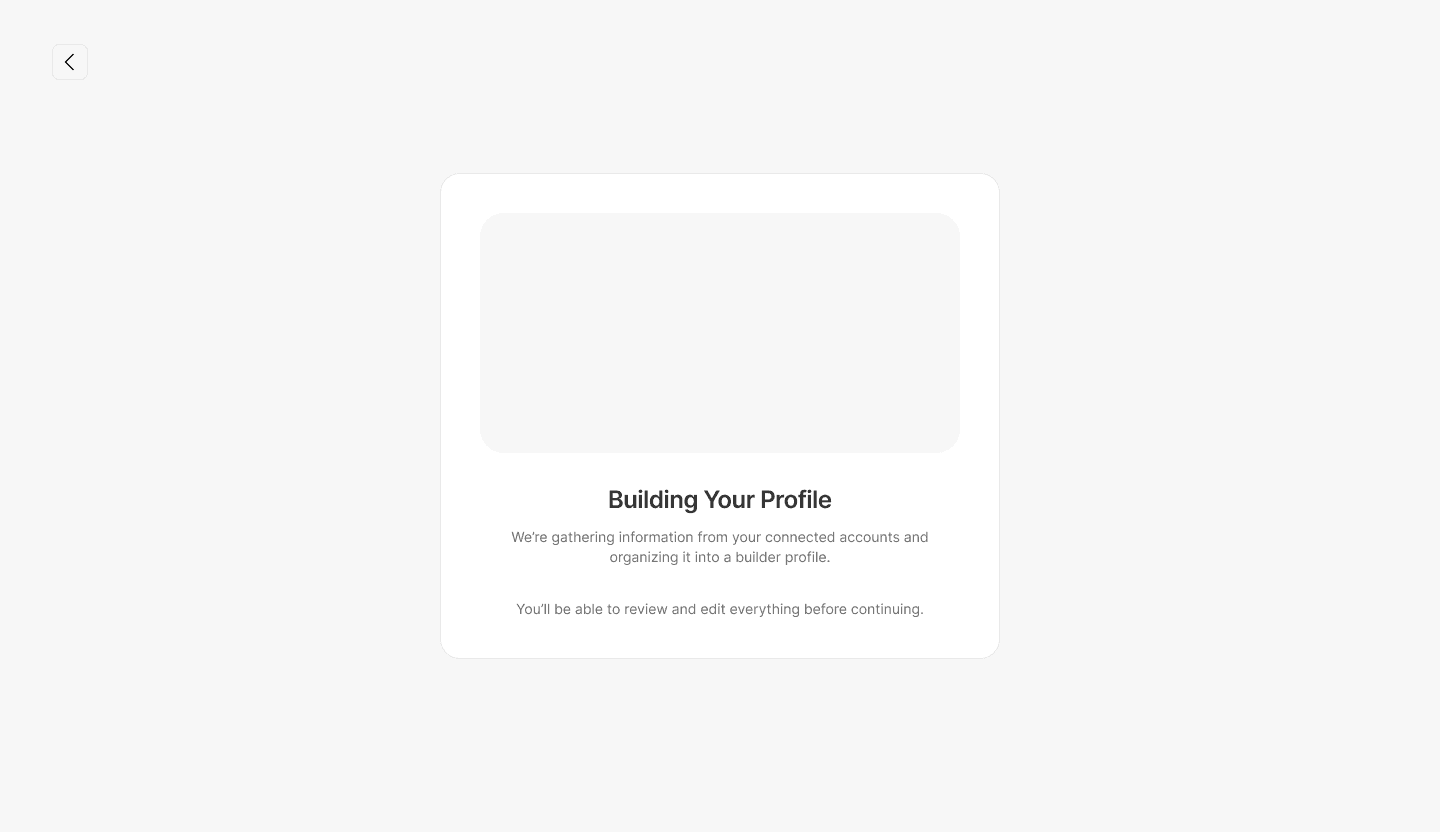
The next exploration focused on the effort required to build a profile. I looked at ways to reduce repetitive input by using information builders may already have elsewhere.
The next exploration focused on the effort required to build a profile. I looked at ways to reduce repetitive input by using information builders may already have elsewhere.


FINAL DIRECTION
FINAL DIRECTION
A Mobile-First Builder Experience - Bringing opportunities to the builder
A Mobile-First Builder Experience - Bringing opportunities to the builder
The earlier explorations made me question whether builders needed to continuously monitor a dashboard at all. Since opportunities are not constant, the experience could instead come to the builder when something relevant happens.
This led to a mobile-first, notification-driven direction where DevLabs could reach builders through iMessage/RCS when a founder shows interest or an opportunity becomes relevant, thereby keeping the process highly accessible and easy to reply to.
The earlier explorations made me question whether builders needed to continuously monitor a dashboard at all. Since opportunities are not constant, the experience could instead come to the builder when something relevant happens.
This led to a mobile-first, notification-driven direction where DevLabs could reach builders through iMessage/RCS when a founder shows interest or an opportunity becomes relevant, thereby keeping the process highly accessible and easy to reply to.
The earlier explorations made me question whether builders needed to continuously monitor a dashboard at all. Since opportunities are not constant, the experience could instead come to the builder when something relevant happens.
This led to a mobile-first, notification-driven direction where DevLabs could reach builders through iMessage/RCS when a founder shows interest or an opportunity becomes relevant, thereby keeping the process highly accessible and easy to reply to.
FOUNDER EXPERIENCE
FOUNDER EXPERIENCE
Structuring the hiring journey
Structuring the hiring journey
The founder experience needed to move from an open-ended, agent-heavy interface to a clearer hiring workflow. I explored three areas: reducing onboarding effort, connecting onboarding directly to the hiring goal, and making the hiring process easier to track and navigate.
The founder experience needed to move from an open-ended, agent-heavy interface to a clearer hiring workflow. I explored three areas: reducing onboarding effort, connecting onboarding directly to the hiring goal, and making the hiring process easier to track and navigate.
The founder experience needed to move from an open-ended, agent-heavy interface to a clearer hiring workflow. I explored three areas: reducing onboarding effort, connecting onboarding directly to the hiring goal, and making the hiring process easier to track and navigate.


01
01
Reducing onboarding effort
Reducing onboarding effort
Instead of asking founders to manually enter information they had already shared elsewhere, I explored using LinkedIn to pre-fill both personal and company details. The founder could review the imported information, make changes where needed, and confirm it before entering the product.
LinkedIn → Personal details + Company details → Review → Confirm
This reduced repetitive input while still giving founders control over what information was carried into DevLabs.
Instead of asking founders to manually enter information they had already shared elsewhere, I explored using LinkedIn to pre-fill both personal and company details. The founder could review the imported information, make changes where needed, and confirm it before entering the product.
LinkedIn → Personal details + Company details → Review → Confirm
This reduced repetitive input while still giving founders control over what information was carried into DevLabs.
Instead of asking founders to manually enter information they had already shared elsewhere, I explored using LinkedIn to pre-fill both personal and company details. The founder could review the imported information, make changes where needed, and confirm it before entering the product.
LinkedIn → Personal details + Company details → Review → Confirm
This reduced repetitive input while still giving founders control over what information was carried into DevLabs.
02
02
Connecting onboarding to the hiring goal
Connecting onboarding to the hiring goal
The next iteration focused on the transition from onboarding into the actual product. Rather than treating onboarding as a separate setup step, I explored using the agent as the entry point into the hiring process.
The agent would guide the founder from their immediate hiring need towards a more detailed job description, while reducing the amount of information they had to structure themselves. Once the requirement was clear, relevant builders could be surfaced directly within the same flow, with their profiles and actions to connect.
Hiring need → Agent guidance → Job description → Relevant builders → Connect
The next iteration focused on the transition from onboarding into the actual product. Rather than treating onboarding as a separate setup step, I explored using the agent as the entry point into the hiring process.
The agent would guide the founder from their immediate hiring need towards a more detailed job description, while reducing the amount of information they had to structure themselves. Once the requirement was clear, relevant builders could be surfaced directly within the same flow, with their profiles and actions to connect.
Hiring need → Agent guidance → Job description → Relevant builders → Connect
03
03
Making the hiring process visible
Making the hiring process visible
The final exploration focused on what happens after a hiring request is created. I explored a more structured hiring workspace where candidates, stages, actions, and history were visible in one place.
Instead of making founders move between different parts of the product to understand what was happening, the flow kept candidate information, hiring status, previous activity, and next actions accessible throughout the process.
Search → Candidates → Review → Shortlist → Trial → Evaluate → Hire
The final exploration focused on what happens after a hiring request is created. I explored a more structured hiring workspace where candidates, stages, actions, and history were visible in one place.
Instead of making founders move between different parts of the product to understand what was happening, the flow kept candidate information, hiring status, previous activity, and next actions accessible throughout the process.
Search → Candidates → Review → Shortlist → Trial → Evaluate → Hire


Hi-Fi Explorations
Hi-Fi Explorations
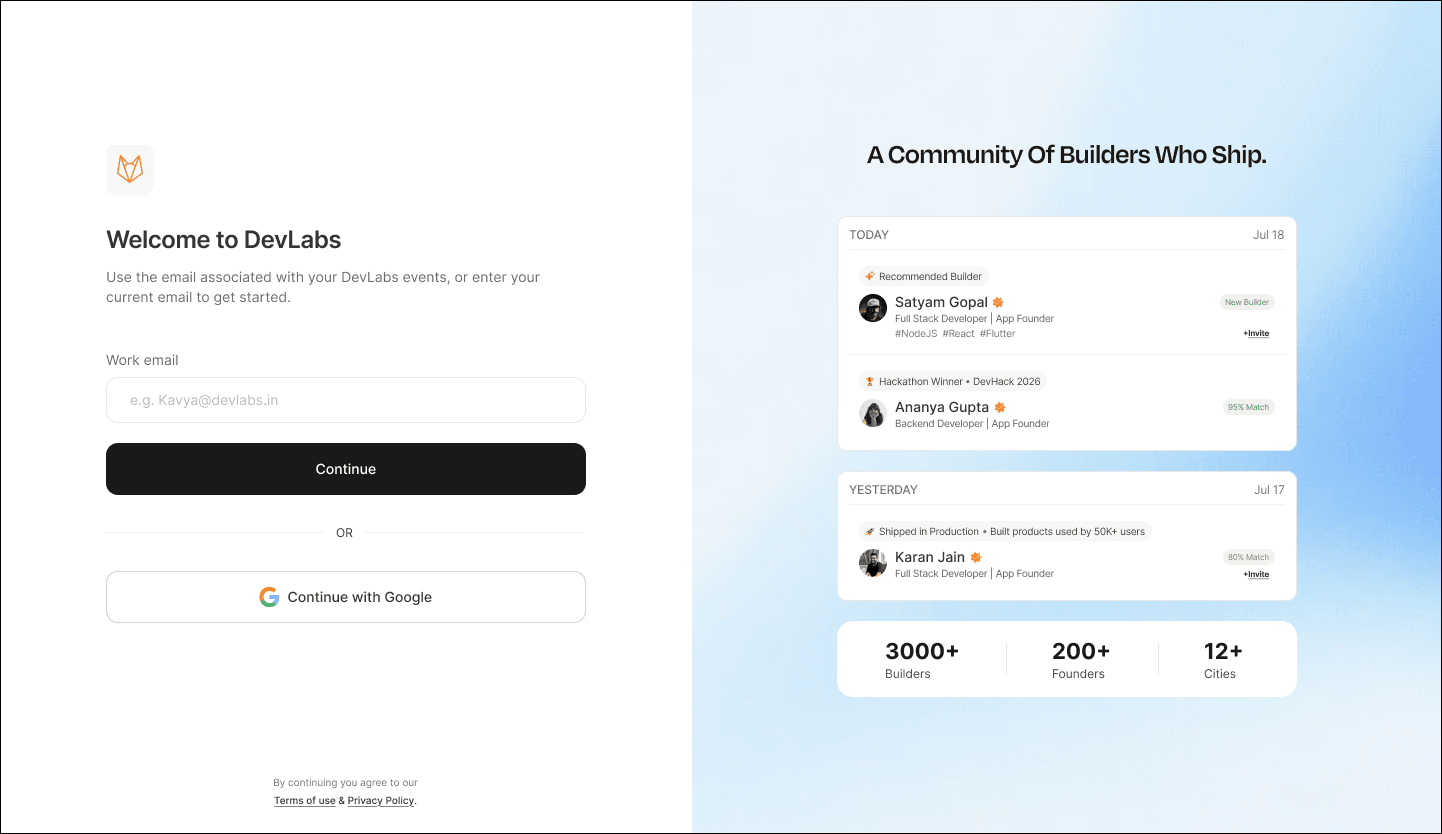
With the core flows established, I explored a few key screens in high fidelity to test the visual direction of the product. The explorations focused on hierarchy, layout, information density, and interaction states before carrying the direction across the wider product.
With the core flows established, I explored a few key screens in high fidelity to test the visual direction of the product. The explorations focused on hierarchy, layout, information density, and interaction states before carrying the direction across the wider product.
With the core flows established, I explored a few key screens in high fidelity to test the visual direction of the product. The explorations focused on hierarchy, layout, information density, and interaction states before carrying the direction across the wider product.


Email Design
Email Design
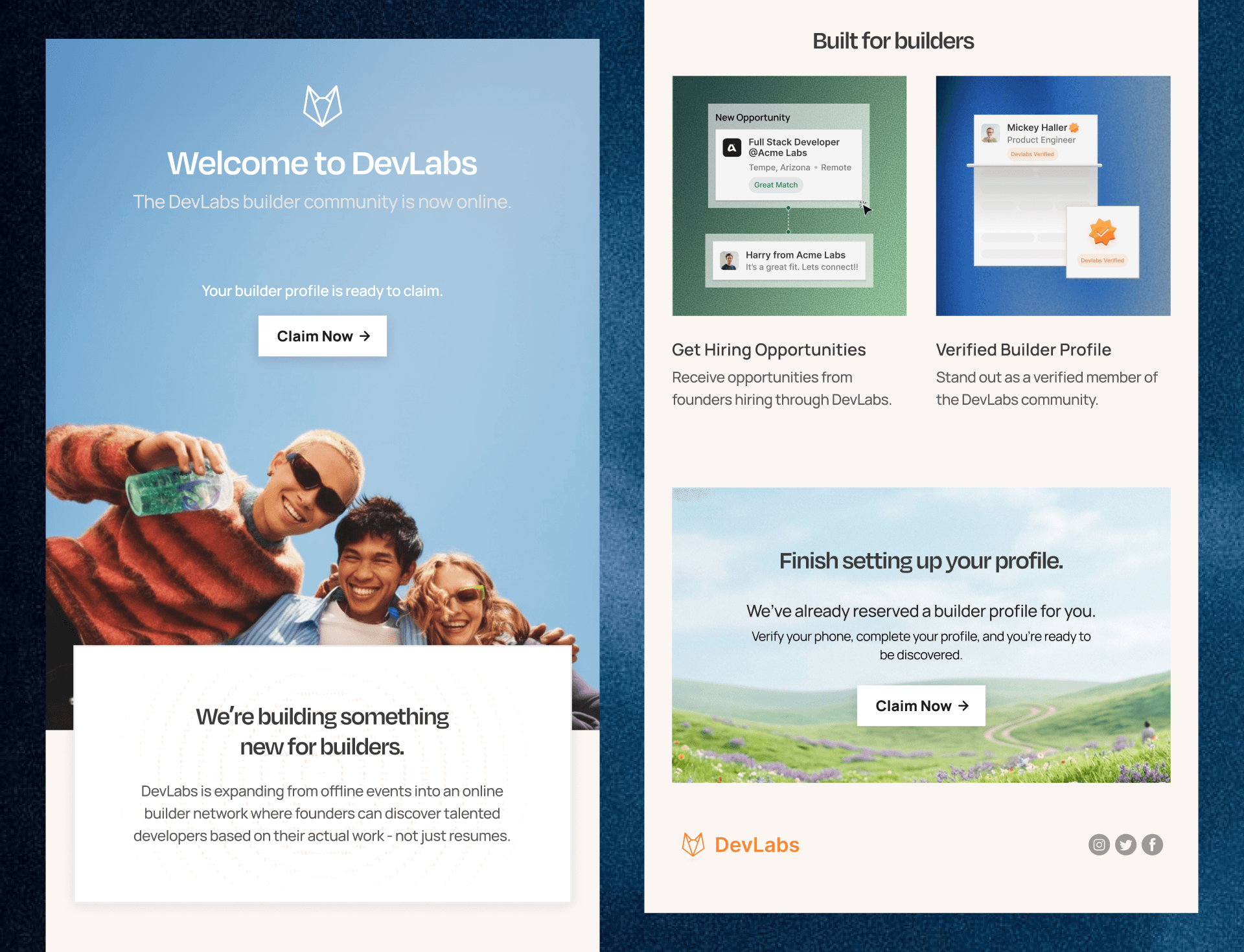
The product redesign also extended into communication with existing builders. I designed email experiences to bring builders back into the platform, communicate relevant updates, and make the next action clear without requiring them to constantly check the product.
The product redesign also extended into communication with existing builders. I designed email experiences to bring builders back into the platform, communicate relevant updates, and make the next action clear without requiring them to constantly check the product.
The product redesign also extended into communication with existing builders. I designed email experiences to bring builders back into the platform, communicate relevant updates, and make the next action clear without requiring them to constantly check the product.
Product Illustrations
Product Illustrations
Alongside the interface, I explored product illustrations to support different states and moments within DevLabs. The explorations looked at how illustration could communicate ideas such as discovery, building, hiring, and progress while staying consistent with the product's visual language.
Alongside the interface, I explored product illustrations to support different states and moments within DevLabs. The explorations looked at how illustration could communicate ideas such as discovery, building, hiring, and progress while staying consistent with the product's visual language.


Creatives
Creatives
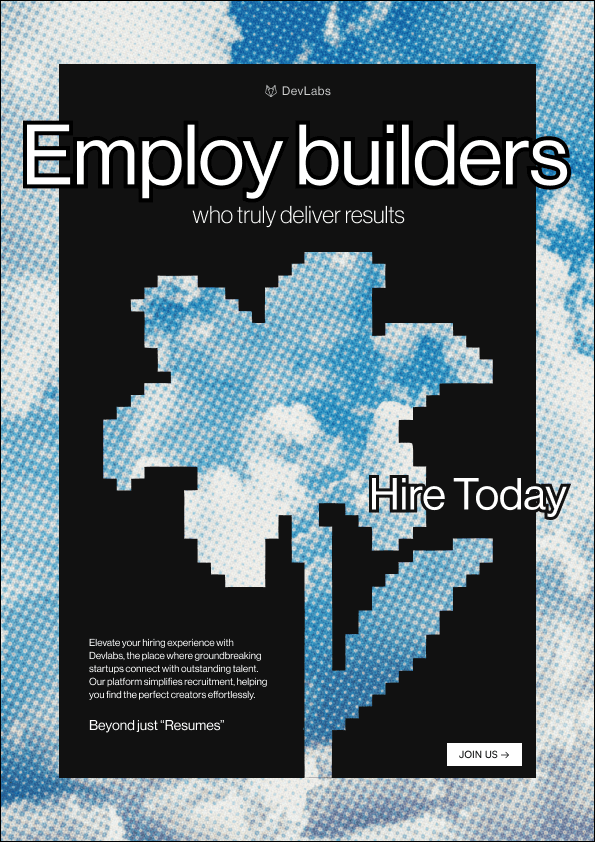
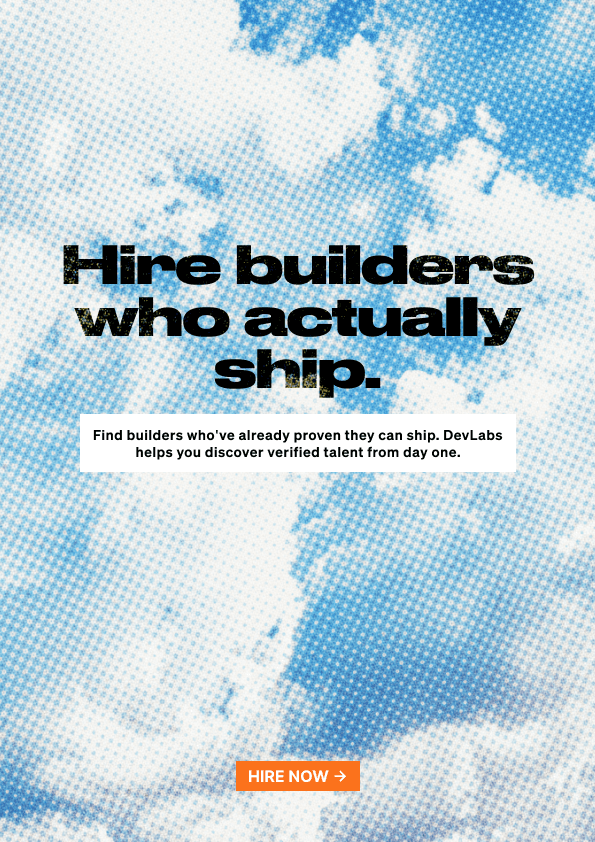
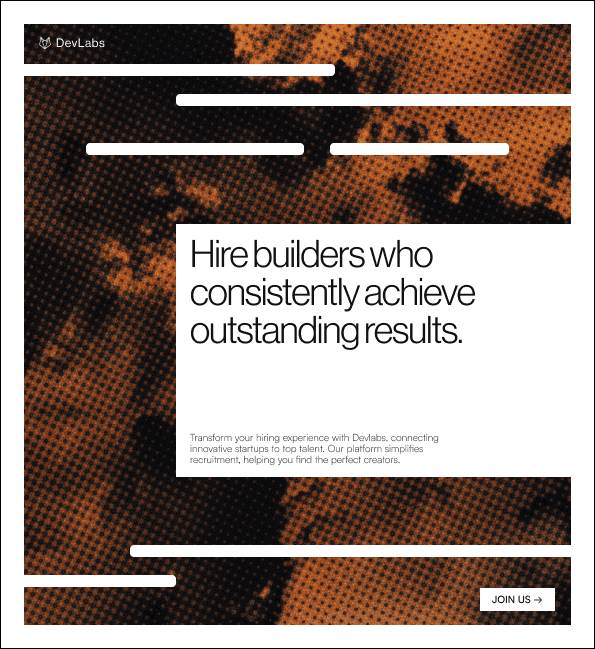
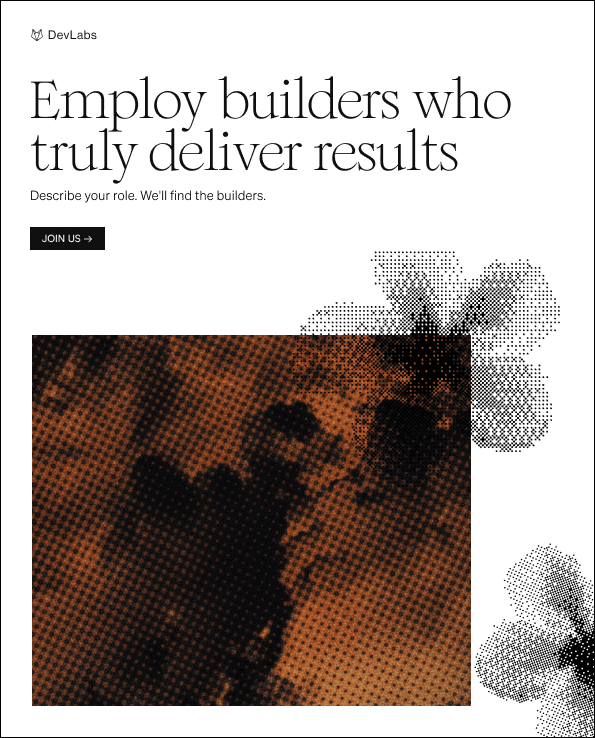
The visual direction was also extended into creatives for DevLabs. I explored how the product's visual language could work across promotional and communication assets while keeping the brand recognisable outside the product interface.
The visual direction was also extended into creatives for DevLabs. I explored how the product's visual language could work across promotional and communication assets while keeping the brand recognisable outside the product interface.




Website
Website
With the product direction taking shape, I also worked on redesigning the DevLabs website to reflect the new product and brand direction. The goal was to create a clearer marketing experience while keeping the visual language connected to the product.
With the product direction taking shape, I also worked on redesigning the DevLabs website to reflect the new product and brand direction. The goal was to create a clearer marketing experience while keeping the visual language connected to the product.
With the product direction taking shape, I also worked on redesigning the DevLabs website to reflect the new product and brand direction. The goal was to create a clearer marketing experience while keeping the visual language connected to the product.
I explored 200–300+ screens and layout variations, iterating on content hierarchy, navigation, section structure, visual treatments, and interactions. This process helped establish the direction for the final website, which is currently being developed.
I explored 200–300+ screens and layout variations, iterating on content hierarchy, navigation, section structure, visual treatments, and interactions. This process helped establish the direction for the final website, which is currently being developed.


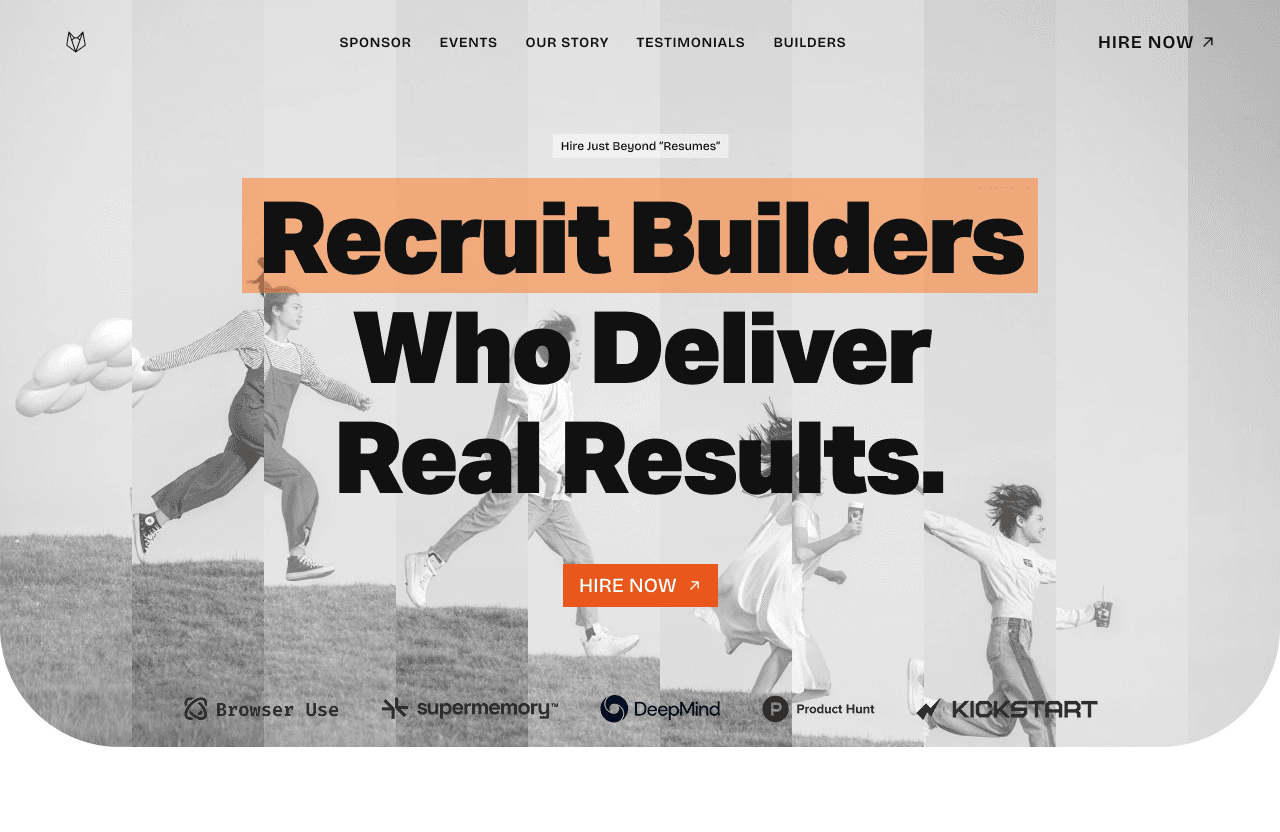


Current website direction - work in progress.
Current website direction - work in progress.
